
Have you ever dreamed of buying a house for pennies on the dollar? It might sound too good to be true, but it’s possible through tax lien investing. This strategy allows you to acquire properties at a fraction of their market value, offering the potential for significant returns. But before you jump in, it’s crucial to understand exactly what a tax lien is and how to navigate this unique investment opportunity. This comprehensive guide will provide you with everything you need to know to start investing in tax liens with confidence.

What You’ll Discover About Tax Liens on Houses:
- A clear explanation of tax liens and how they work.
- Step-by-step instructions on how to buy a house with a tax lien.
- Where to find the best tax lien investment opportunities.
- Expert tips for successful bidding and due diligence.
- Answers to frequently asked questions.
Table of Contents
What is a Tax Lien on a House? A Quick Explanation
When a homeowner fails to pay their property taxes, the local government can place a tax lien on their property. This lien acts as a legal claim against the property for the unpaid taxes. If the homeowner doesn’t pay off the debt, the government can sell the tax lien at auction.
Here’s how it works: Investors bid on the tax lien, paying the delinquent taxes on behalf of the homeowner. In return, the investor receives a certificate and earns interest on the amount paid. If the homeowner doesn’t repay the debt within a certain timeframe (the redemption period), the investor may be able to foreclose on the property and take ownership.
Example: In Cook County, Illinois, if a homeowner fails to pay their property taxes, the county places a lien on the property. This lien is then auctioned off, and the winning bidder pays the delinquent taxes plus interest. The homeowner has two years to repay the debt, including the interest (currently set at 18% per annum in Illinois). If they fail to do so, the investor can initiate foreclosure proceedings.
How to Buy a House with a Tax Lien in 2025: Need-to-Know Details
When and Where the Auctions Happen
Tax lien auctions are typically held by the county tax collector’s office. The frequency and timing of these auctions vary by location. To find specific dates, times, and locations, you can:
- Visit the county tax collector’s website.
- Contact the tax collector’s office directly.
- Check local newspapers and legal publications for auction announcements.
Auction Format and Payment
Auctions can be conducted in-person or online, depending on the county. Most counties require payment in the form of cash, cashier’s check, or money order. Some auctions may also accept credit cards. Be prepared to make a deposit, usually a percentage of the bid amount, immediately after winning the auction.
Types of Tax Lien Sales
- Tax Lien Certificates: Investors bid on the interest rate they are willing to accept on the delinquent taxes. The certificate with the lowest interest rate wins.
- Tax Deed Sales: Investors bid on the property itself. The highest bidder wins the property outright, subject to a redemption period.
Minimum bids are usually set at the amount of delinquent taxes and any associated fees. The redemption period varies by state and can range from a few months to several years. This period gives the homeowner time to repay the debt and reclaim their property.
How to Find Properties with Tax Liens
Official Resources
- County Tax Collector Websites: Most counties maintain websites with lists of properties with delinquent taxes and upcoming auction information.
- County Tax Collector Offices: You can visit the tax collector’s office in person to obtain lists and information about tax lien sales.
Online Resources
- Bid4Assets: This website lists properties for sale at auction, including tax lien properties.
Offline Resources
- Local Newspapers: Check the legal notices section for tax lien sale announcements.

- Public Bulletin Boards: Some counties post notices of tax lien auction on public bulletin boards at the courthouse or other government buildings.
- Networking Events: Attend real estate investor seminars and events to connect with other investors and learn about potential tax lien opportunities.
Where is the Prime Location for Tax Lien Investments?
The best location for tax lien investments depends on your individual goals and risk tolerance. However, some general factors to consider include:
- High Property Values: Areas with high property values may offer greater potential for profit if you acquire a property through foreclosure.
- High Tax Delinquency Rates: Counties with high rates of tax delinquency often have more tax lien properties available.
- Favorable Local Regulations: Research the tax lien laws and procedures in your target area to ensure they align with your investment strategy.
Potential for Significant Discounts
Tax lien certificates are often sold at a significant discount to their market value, providing an opportunity to acquire properties below market price.
Profit Potential
The potential ROI on tax lien investments can be substantial, particularly if the homeowner redeems the lien and you earn interest. However, it’s essential to evaluate the risks and conduct thorough due diligence before bidding.
How to Register and Participate in a Tax Lien Auction
Requirements to Participate
Most counties require you to register before participating in a tax lien auction. Requirements may include providing identification, proof of residency, and sometimes a deposit.
Registration Process
The registration process varies by county. You may be able to register online, in person at the tax collector’s office, or by mail.
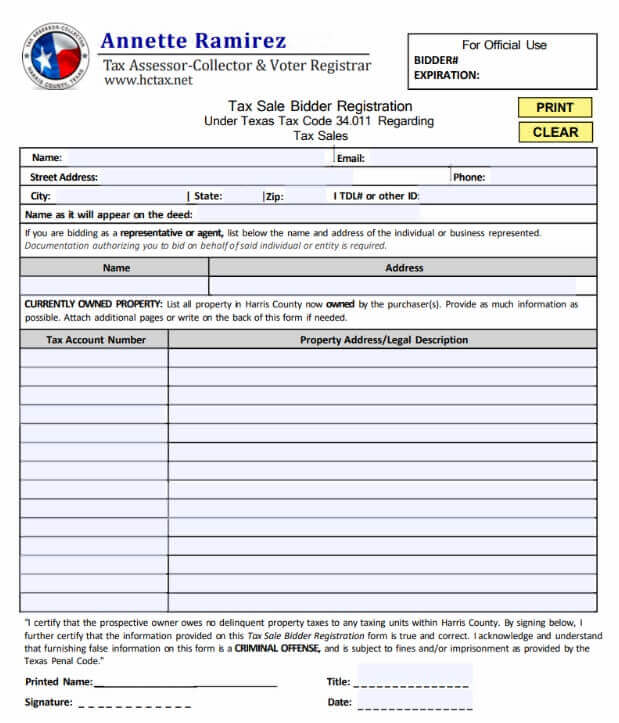
Registration Form – https://www.hctax.net/Forms/TaxSaleBidderRegistration.pdf
Procedure – https://www.hctax.net/property/taxsales/taxsales
On Auction Day
Arrive early to familiarize yourself with the auction procedures and property listings. Have your payment ready and be prepared to bid strategically.
Before You Bid: Due Diligence and Guidance
Conduct Thorough Research
- Property Inspections: Inspect the property to assess its condition and potential value.
- Title Searches: Conduct a title search to ensure there are no other liens or encumbrances on the property.
- Market Analysis: Research the local real estate market to determine the property’s potential resale value.
Evaluate Risks
- Hidden Costs: Factor in potential costs like property taxes, insurance, and maintenance.
- Legal Considerations: Understand the foreclosure process and any associated legal fees.
Utilize Investment Tools
- Property Valuation Tools: Use online tools to estimate the property’s market value.
- Financial Calculators: Calculate potential ROI and assess the financial feasibility of the investment.
Bonus Section: Nuggets of Wisdom from Experts
- Start Small: If you’re new to tax lien investing, start with a small investment to gain experience.
- Diversify Your Portfolio: Spread your investments across different properties and locations to reduce risk.
- Network with Other Investors: Learn from experienced investors and share information about potential opportunities.
Frequently Asked Questions
How long does a tax lien stay on a house?
A tax lien remains on the property until the property taxes are paid in full or the property is sold through foreclosure. This can be indefinite, as there’s typically no expiration date for property tax liens. However, many jurisdictions begin foreclosure proceedings after 2-3 years of delinquency.
Can I sell a house with a tax lien?
Yes, but the lien must be paid from the sale proceeds before other debts. The title company will ensure the tax lien is satisfied during closing. Some buyers may be willing to purchase with the understanding that the lien will be paid from the proceeds at closing.
What happens if I buy a tax lien certificate?
You earn interest on your investment when the owner pays the taxes, or you may have the right to foreclose if they don’t pay. Interest rates vary by state, ranging from 8% to 25% annually. You’ll need to monitor the redemption period and follow state procedures if foreclosure becomes necessary.
Do tax liens take priority over mortgages?
Yes, property tax liens typically have priority over all other liens, including mortgages. This “super-priority” status means tax liens must be paid first when a property is sold or foreclosed upon, regardless of when other liens were recorded.
How much money do I need to invest in tax liens?
Initial investments can range from $1,000 to $10,000 or more, depending on the property and location. You’ll need funds for the tax amount owed plus potential subsequent tax payments, recording fees, and legal costs. Some jurisdictions require minimum deposits of 10-25% of the anticipated purchase amount.
What happens if the property owner doesn't pay during the redemption period?
If the owner doesn’t redeem the property by paying all taxes and interest due within the redemption period, in most cases you can initiate foreclosure proceedings to take ownership of the property. This process requires strict adherence to state laws and may involve legal counsel. Some investors prefer when properties don’t redeem, as they can acquire the property for the tax amount owed.
What happens if the homeowner doesn't redeem the lien?
If the homeowner doesn’t redeem the lien within the redemption period, you may be able to initiate foreclosure proceedings and take ownership of the property.
Do I need to be a resident of the county to participate in a tax lien auction?
Generally, no, but it’s essential to check the specific requirements of the county where you plan to invest.
Ready to Invest in Tax Liens?
Tax lien investing can be a highly lucrative strategy for acquiring properties below market value. By understanding the process, conducting thorough due diligence, and bidding strategically, you can increase your chances of success.
Next Steps:
- Research tax lien laws and procedures in your target area.
- Find upcoming tax lien auctions.
- Register to participate and start bidding!
Conclusion
Investing in tax liens offers a unique opportunity to acquire properties at a significant discount. While there are risks involved, with careful research and due diligence, you can potentially achieve substantial returns.Investing in tax liens presents a unique avenue for acquiring properties at a substantial discount. While there are inherent risks, meticulous research and due diligence can lead to significant returns. By understanding the process, conducting thorough research, and carefully evaluating potential investments, you can position yourself to capitalize on the opportunities presented by tax lien investing. Remember to consult with professionals for personalized guidance and to navigate the complexities of this investment strategy effectively.